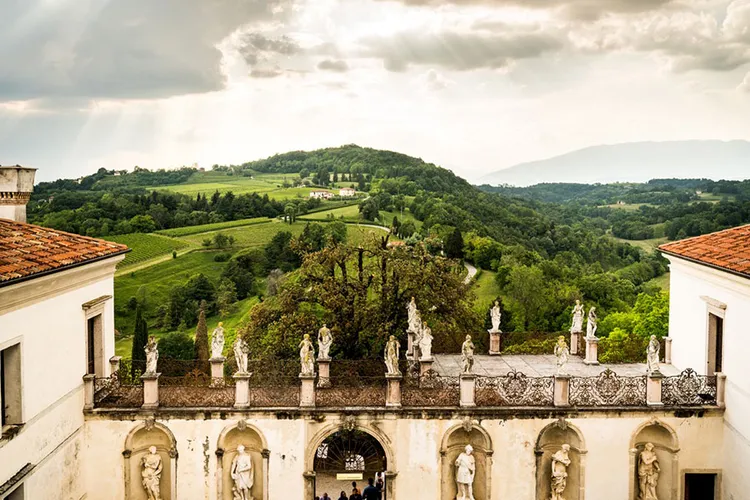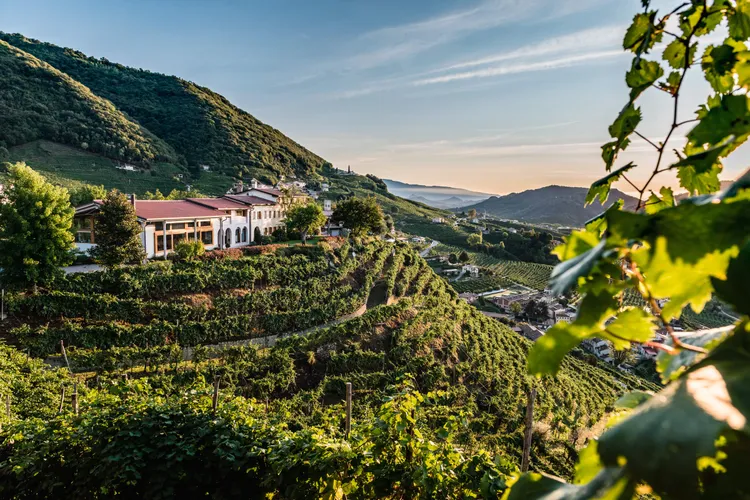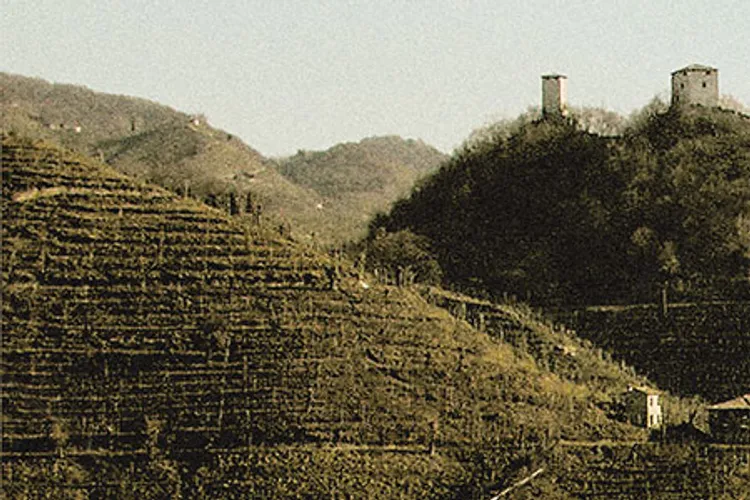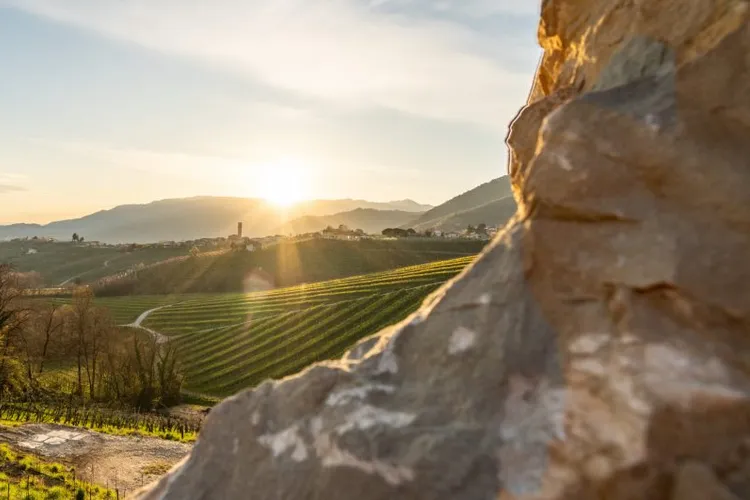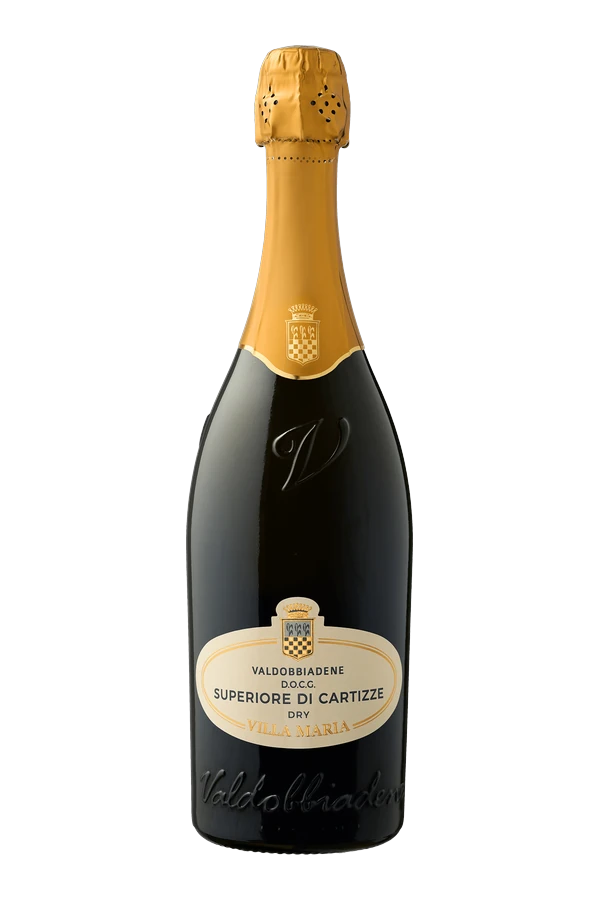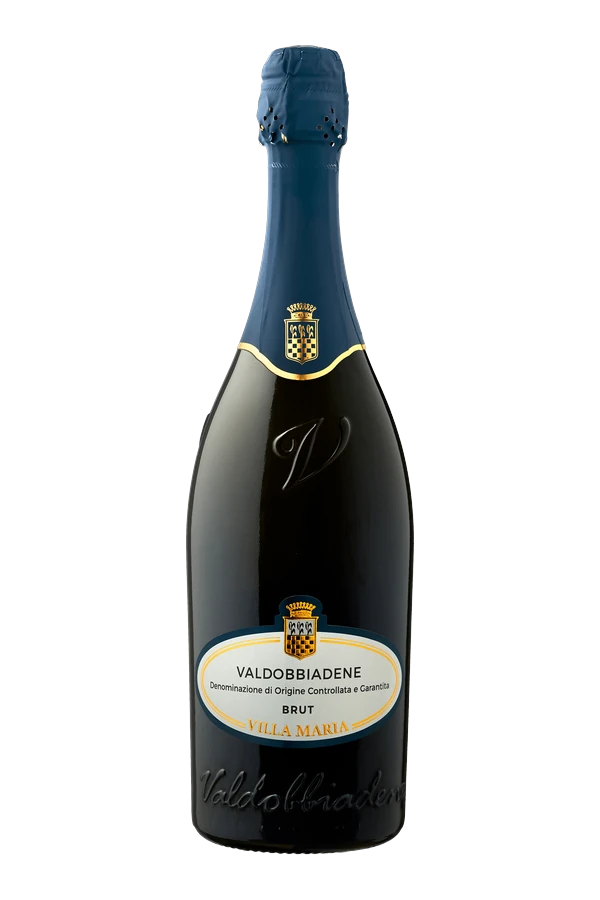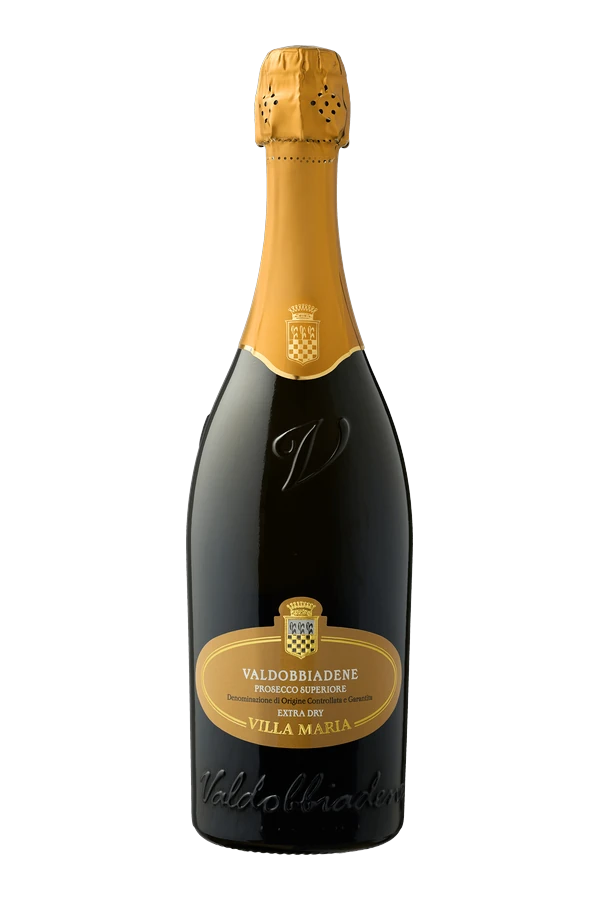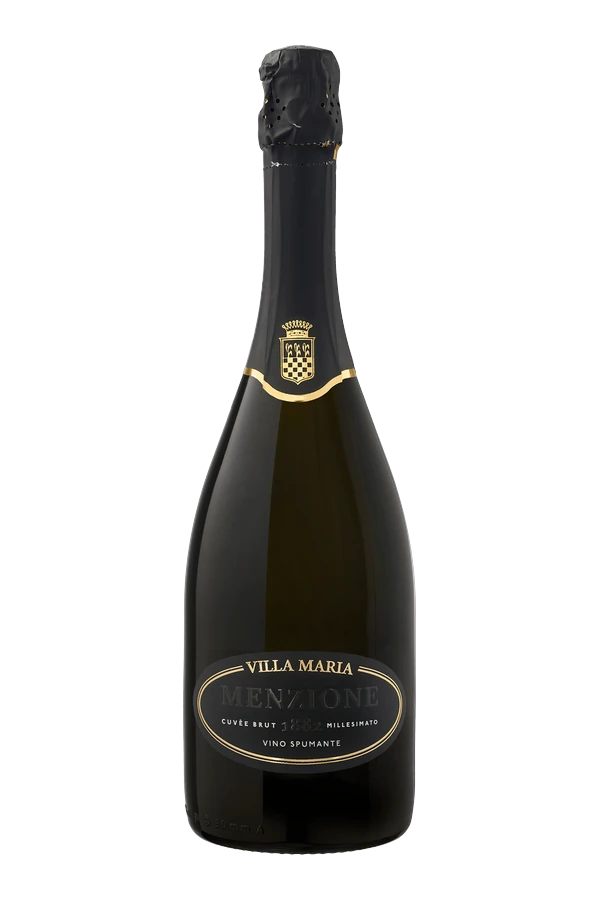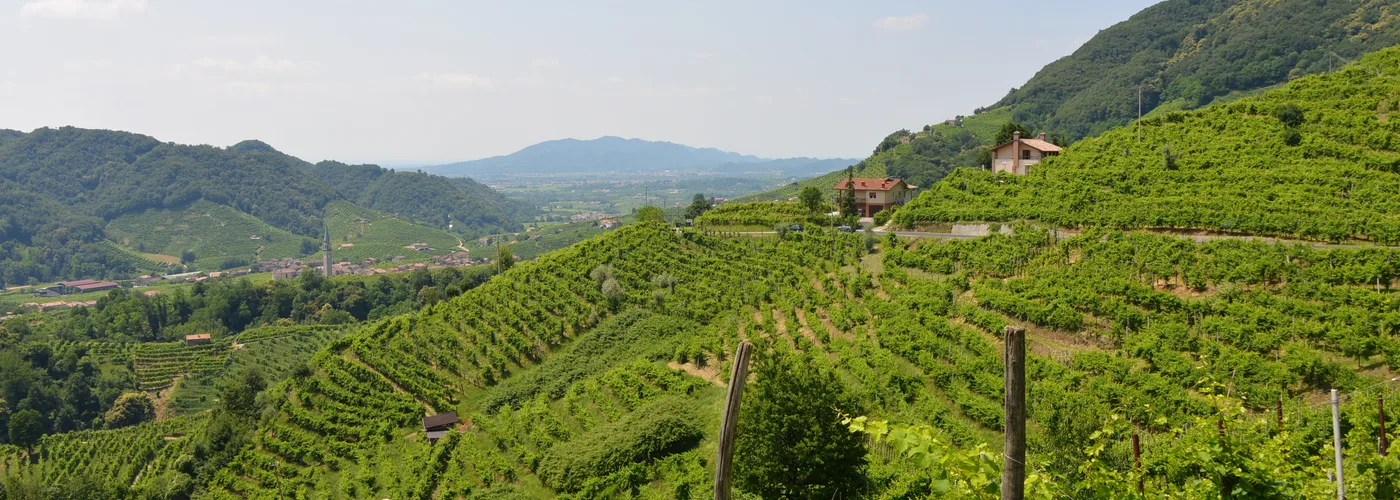
In 2019 UNESCO added the Prosecco hills between Conegliano and Valdobbiadene to the World Heritage list, as a cultural landscape rather than a natural one. What the citation recognises is the hogback topography, a sequence of steep parallel ridges of sandstone and marl, and the way it has been farmed: on narrow grass terraces called ciglioni, cut across the slope and held by turf rather than stone, which exist in this form almost nowhere else.
The mosaic is the point. Vineyards alternate with patches of woodland on the steepest ground, small villages sit on the saddles between ridges, and the holdings are tiny, often worked by families who also farm something else. The gradients rule out machinery, so the work is done by hand and the cost per bottle is several times that of the flat Prosecco country on the plain below. The listing came with obligations about landscape management that the growers are still working through.