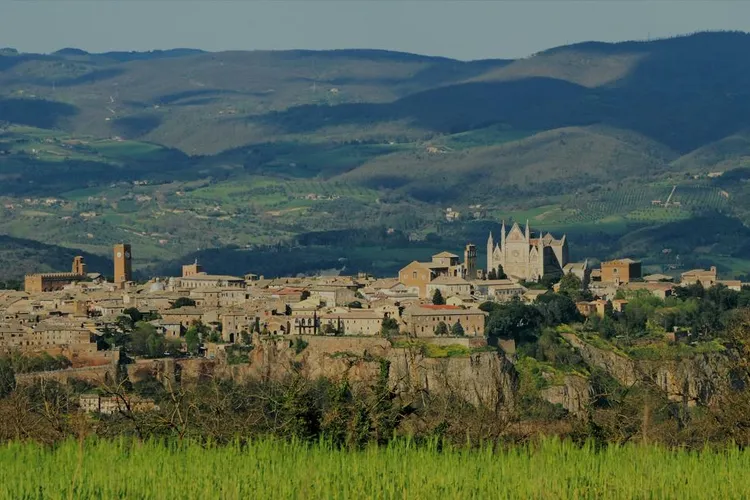
Orvieto is the largest appellation in Umbria, spread across the volcanic and clay hills around the city and over the border into Lazio. The city itself stands on a flat topped plug of tufa rising straight out of the valley, and the rock beneath it is honeycombed with cellars, wells and Etruscan tunnels cut over nearly three thousand years.
The wine is a blend led by Grechetto and Procanico, the local Trebbiano, with Verdello, Drupeggio and Malvasia. Until the 1960s it was made abboccato, faintly sweet, in cellars cool enough to stop the fermentation early, and that was what medieval popes and Renaissance painters drank; the modern wine is almost all dry. In the Corbara hills by the river, the autumn mists bring noble rot, and a small quantity of sweet Orvieto muffa nobile is made from botrytised grapes.