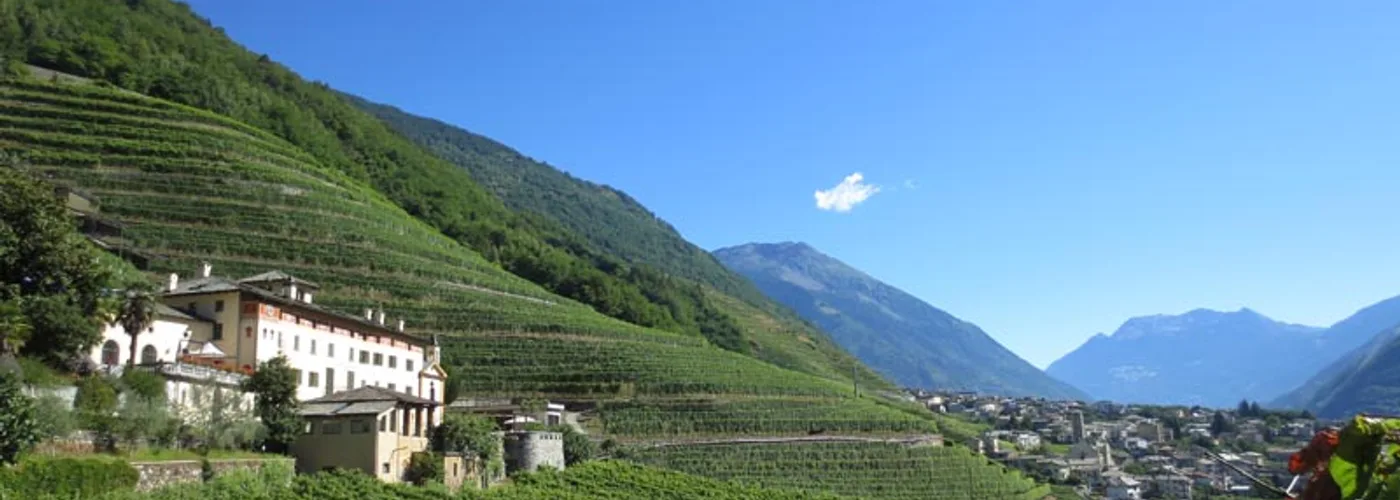
The Valtellina runs east to west along the Adda in the province of Sondrio, which is the whole point: it is one of very few Alpine valleys oriented so that an entire mountainside faces south. The vineyards are terraced onto that slope between 300 and 800 metres on some 2,500 kilometres of dry stone wall, built and rebuilt over a thousand years, on decomposed granite and sand.
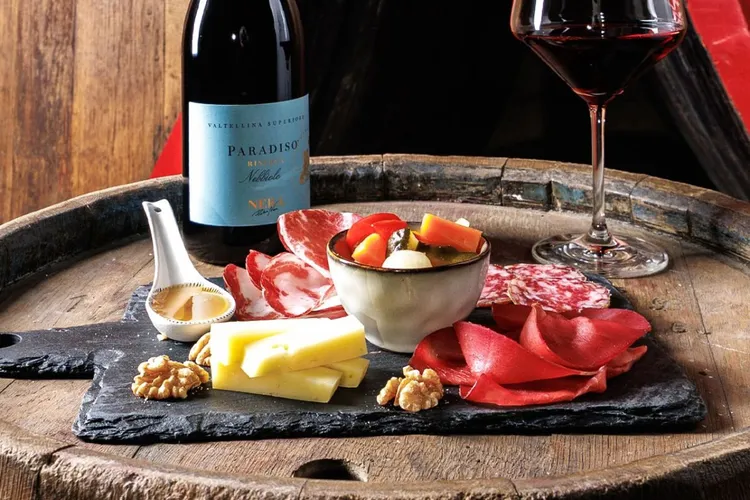
Nebbiolo, called Chiavennasca here, is the grape, and it gives a paler, sharper, more mineral wine than it does in Piedmont. Five subzones run along the slope: Maroggia, Sassella, Grumello, Inferno and Valgella, the last two named for their heat. The region also makes Sforzato, a dry red from grapes dried indoors for three months before pressing, which reaches sixteen per cent alcohol and was being made here long before anyone used the word amarone. The wine was historically sold over the pass into Switzerland.