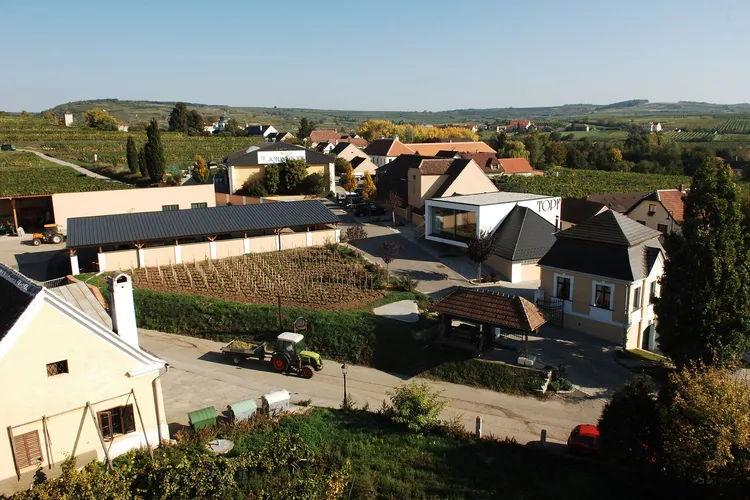
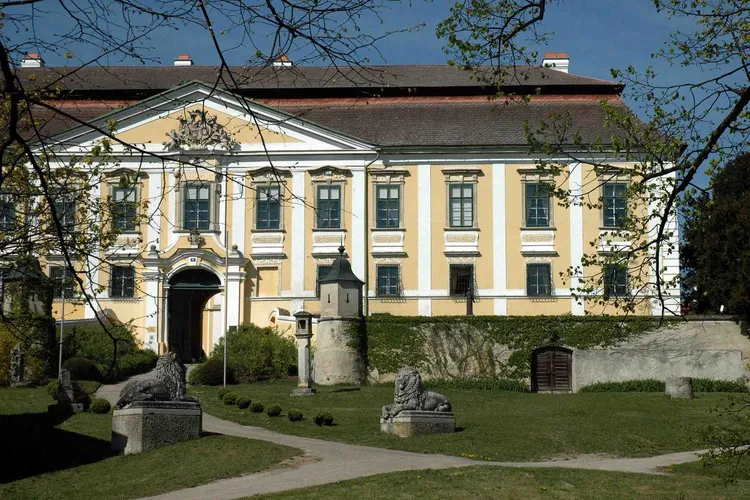
Kamptal follows the river Kamp north from the Danube, with Langenlois, the largest wine town in Austria, at its centre. The slopes are a mixture of loess on the lower ground and weathered primary rock higher up, and the sandstone terraces are steep enough that only a thin skin of soil stays on them. Exposure is good and the valley funnels cool air down from the Waldviertel at night.
That split in the geology divides the wines. Grüner Veltliner on deep loess gives broad, peppery wines with weight; Riesling on the stony upper terraces is tighter and more mineral. The Heiligenstein above Zöbing is the region's famous site, a desert sandstone outcrop of Permian age with a microclimate hot enough to have supported wild cacti, and the Rieslings grown on it are among the longest lived white wines in Austria. Kamptal has been a DAC since 2008.