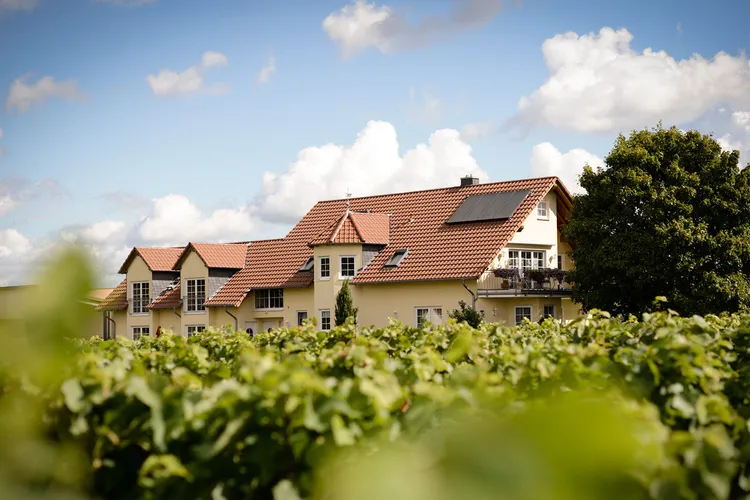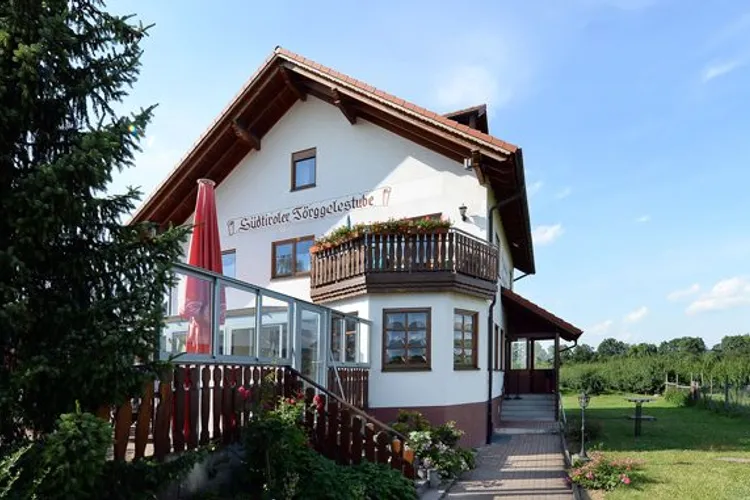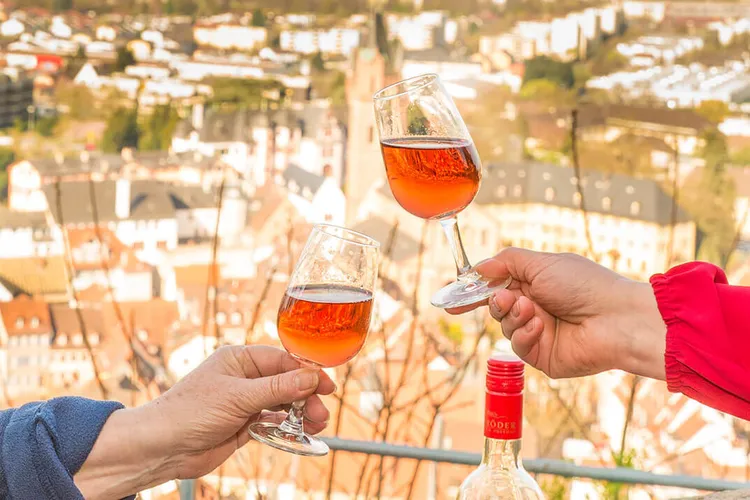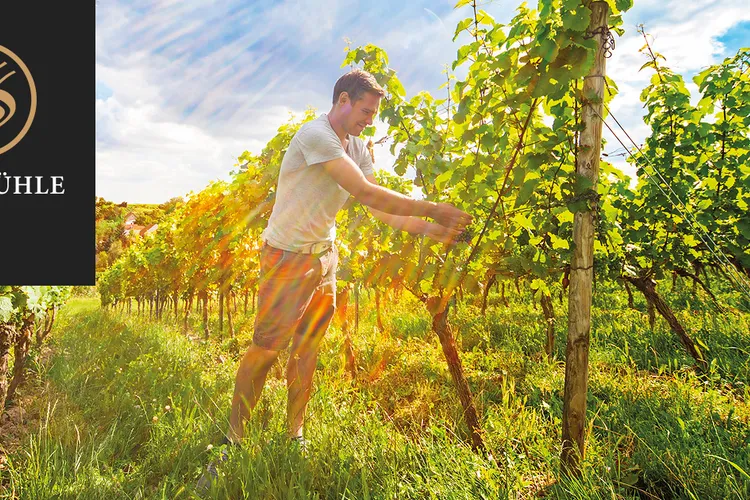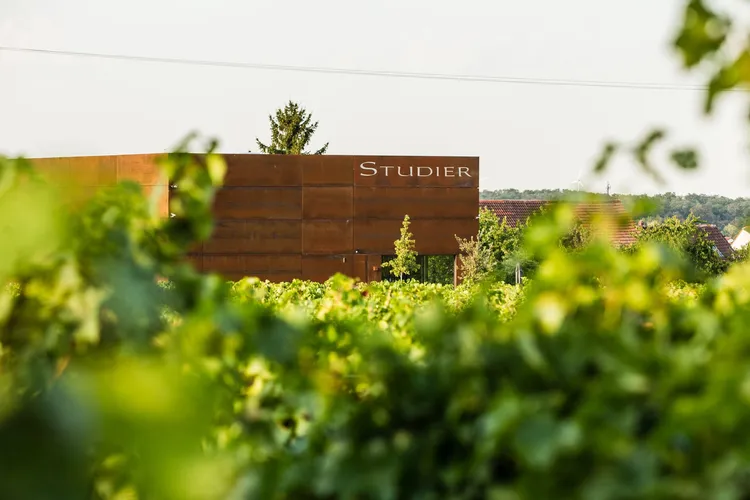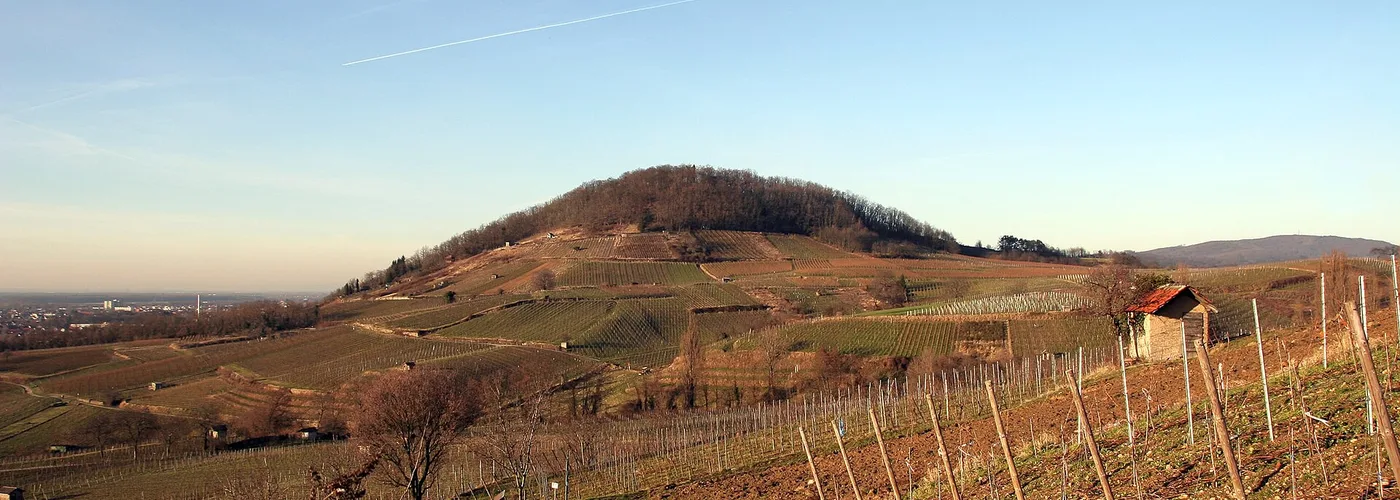
The Hessische Bergstraße is the smallest of the thirteen German quality wine regions, about 460 hectares on the northern and western slopes of the Odenwald in Hesse, between Darmstadt and Heppenheim. The road it is named after has been in use since Roman times, and the hills behind it shelter a strip of ground warm enough that spring arrives here earlier than almost anywhere else in Germany.
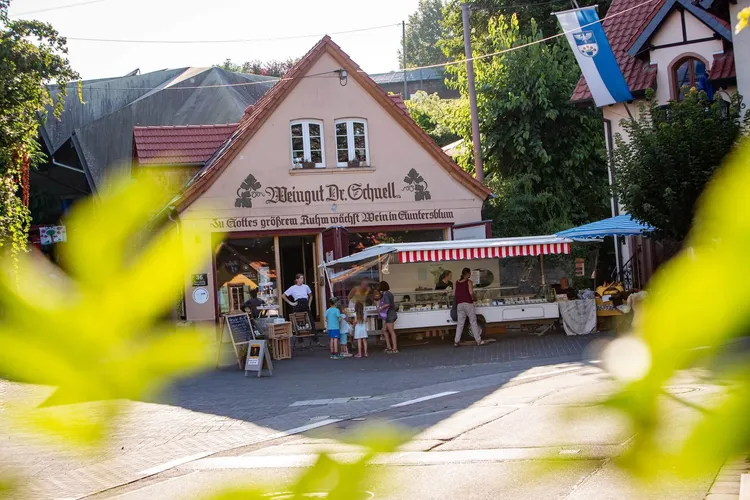
Almost four fifths of the planting is white, with Riesling the leading variety, grown on loess over weathered granite. The wines are soft and generously fruited rather than sharp, which suits the mild sites. Almost nothing leaves the region: production is small, demand is local, and much of it is sold directly from the estate or drunk in the wine festivals that run through the summer. The state domain at Bensheim is the largest single producer.