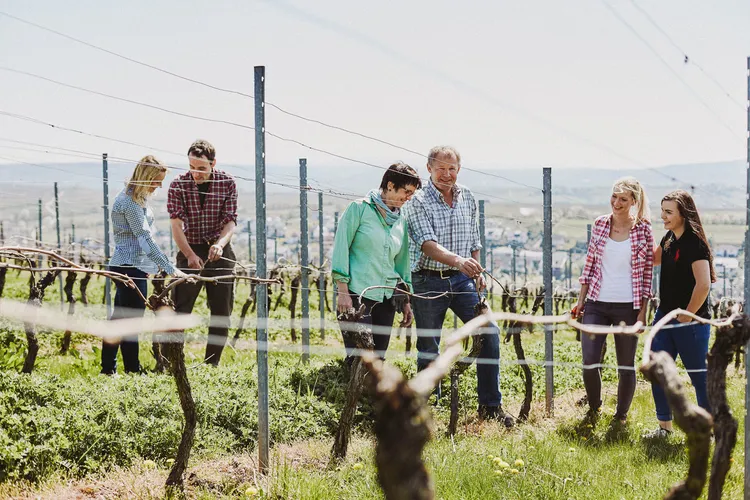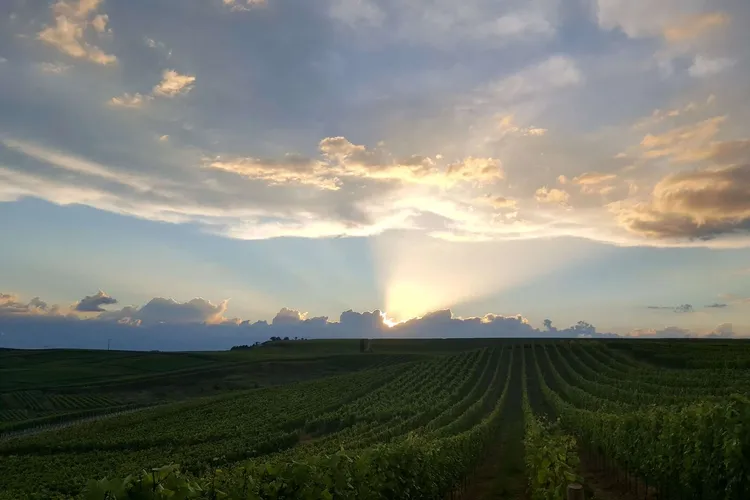
Rheinhessen is the largest German wine region, around 26,000 hectares of gentle hills on the left bank of the Rhine between Worms and Bingen. Most of it is open, rolling farmland rather than dramatic slope, which made it easy to plant and easy to over plant: for decades this was the source of Liebfraumilch and the bulk sweet wine that damaged the reputation of German wine abroad.
The recovery has been one of the more striking stories in European wine. A generation of young growers who took over in the 1990s and 2000s cut yields, moved back towards dry wines and concentrated on the best sites, above all the Rheinterrasse, the steep red slate slope at Nierstein and Nackenheim that falls straight into the river. Riesling leads the quality end, Müller-Thurgau and Silvaner still cover a lot of ground, and the region now produces a substantial amount of serious Pinot as well.