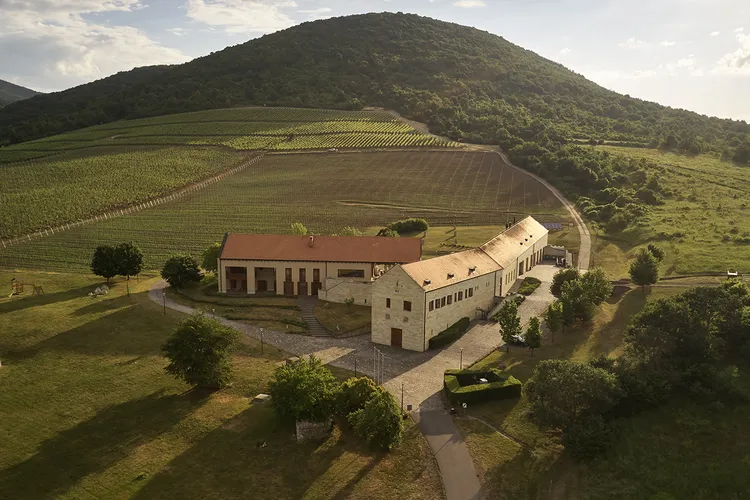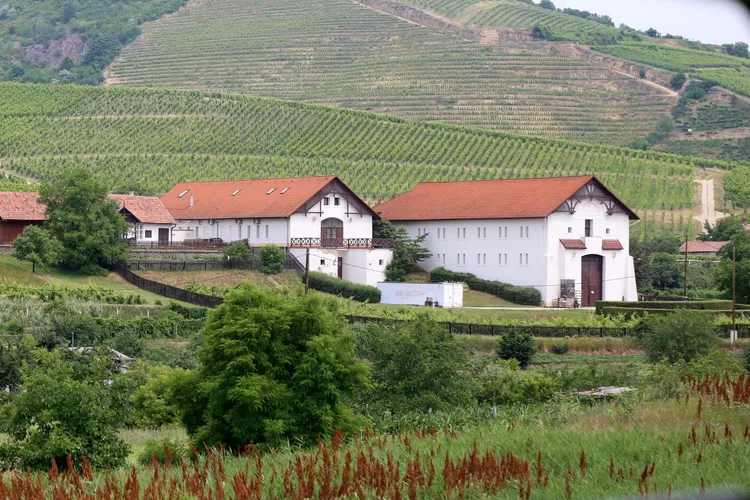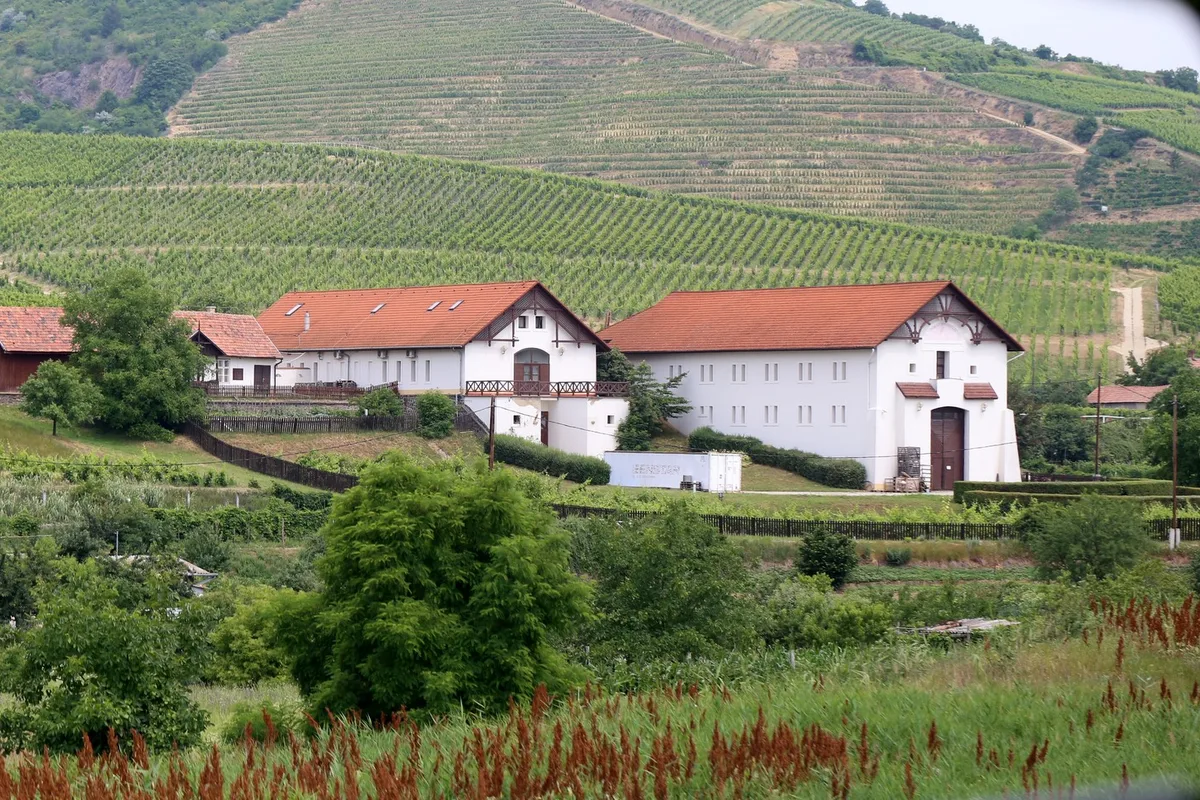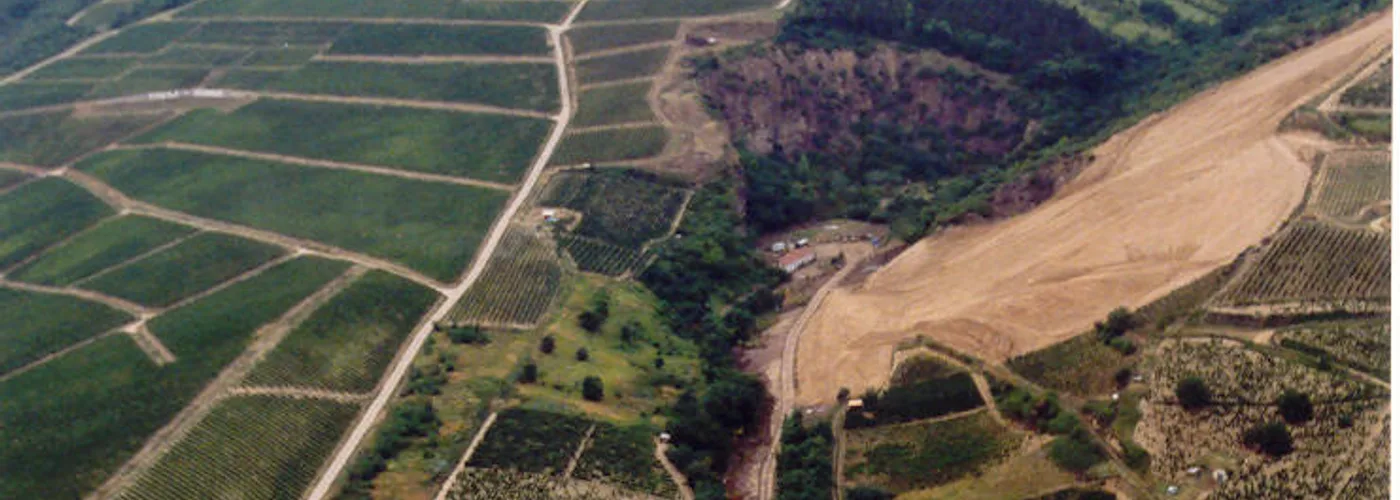
Tokaj occupies the foothills where the Zemplén mountains meet the plain in northeastern Hungary, at the point where the Bodrog joins the Tisza. The two rivers matter as much as the volcanic soil: autumn mists rise off them in the mornings and burn away in the afternoon sun, which is the exact condition noble rot needs to concentrate grapes without turning them to vinegar. The region was classified by royal decree in 1737, making it one of the first anywhere to have its vineyards ranked.
Furmint is the principal grape, with Hárslevelű and Sárga Muskotály alongside. Aszú is made by picking botrytised berries one by one, kneading them to a paste and steeping it in base wine, then ageing the result for years in cellars cut into volcanic rock and lined with black mould. Sweetness is measured in puttonyos. The region spent the socialist decades producing standardised wine for export and has rebuilt since 1990, with dry Furmint now a serious category of its own.