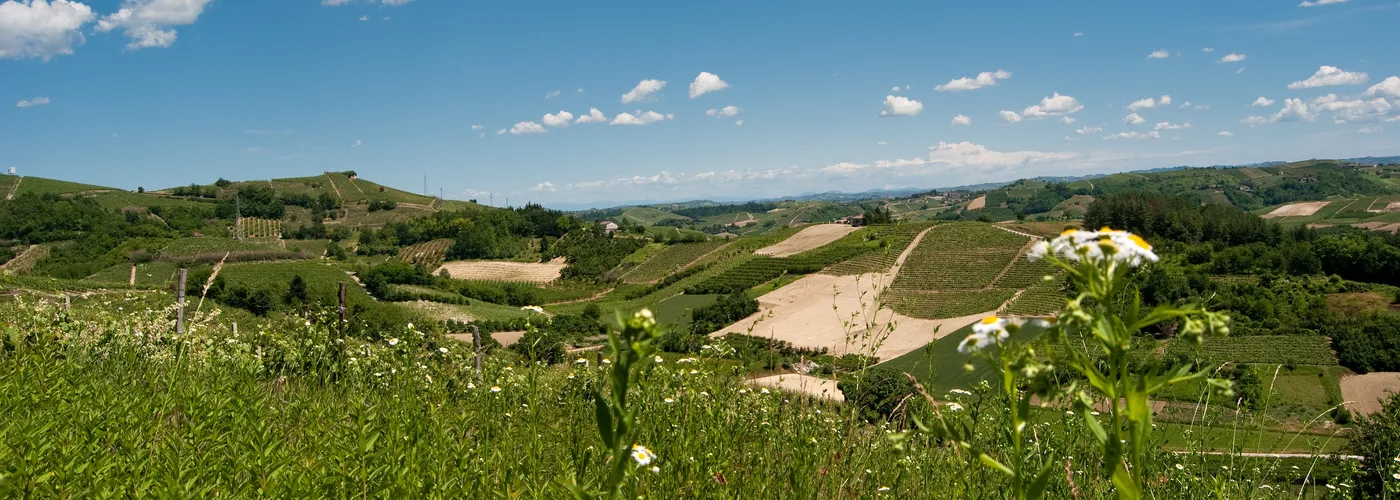
Roero lies on the left bank of the Tanaro opposite the Langhe, in a landscape quite unlike it: younger, sandier soils, deeply eroded into cliffs and ravines the locals call rocche, formed when the river changed course some 250,000 years ago and cut a new bed. The sand makes everything here lighter and quicker, and it is also why the area has fossil beds and no truffles.
Two wines carry the name. Roero is a red from Nebbiolo, more perfumed and softer than Barolo, ready earlier and for many years sold cheaply because of it. Roero Arneis is the white, from a local grape that had almost disappeared in the 1960s, when a handful of growers kept it going as a field blend component to soften Nebbiolo; it now covers more ground than Nebbiolo does and gives a dry, pear and almond scented wine that made Arneis famous outside Italy. Both became DOCG in 2004.